Kitchen
27 products
Kitchen pieces from Alessi, SMEG, WESCO and Mepal, built for daily use rather than for a shelf. A kitchen is the hardest room to buy well for, because nearly everything in it is touched every day and judged accordingly. What is here survives that: a bread bin that still shuts properly after years, an espresso maker worth the ritual. Each links to Amazon with a note on the trade-offs.





Questions and answers
How do you brew pour-over coffee?
Rinse the filter, add medium-fine ground coffee and pour water just off the boil slowly in circles: a little first, letting the grounds bloom for about 30 seconds, then the rest in stages over three to four minutes. A gooseneck kettle such as the Hario V60 kettle makes the slow pour easy, and a kitchen scale keeps the ratio the same each morning.
What is pour-over coffee?
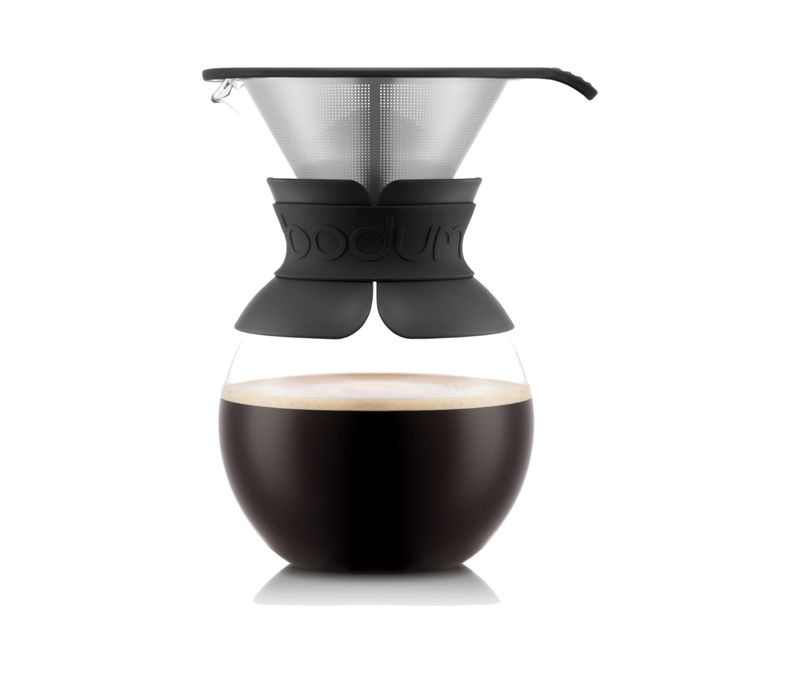
Coffee made by pouring hot water by hand over ground coffee in a filter and letting it drip through into a jug or cup. Because you control the speed and placement of the water, the cup comes out clean and clear. The Bodum Pour Over Coffee Maker does it in one borosilicate glass jug with a permanent stainless steel filter. More in the Gifts for Coffee Lovers guide.
How do you choose a pour-over coffee maker?
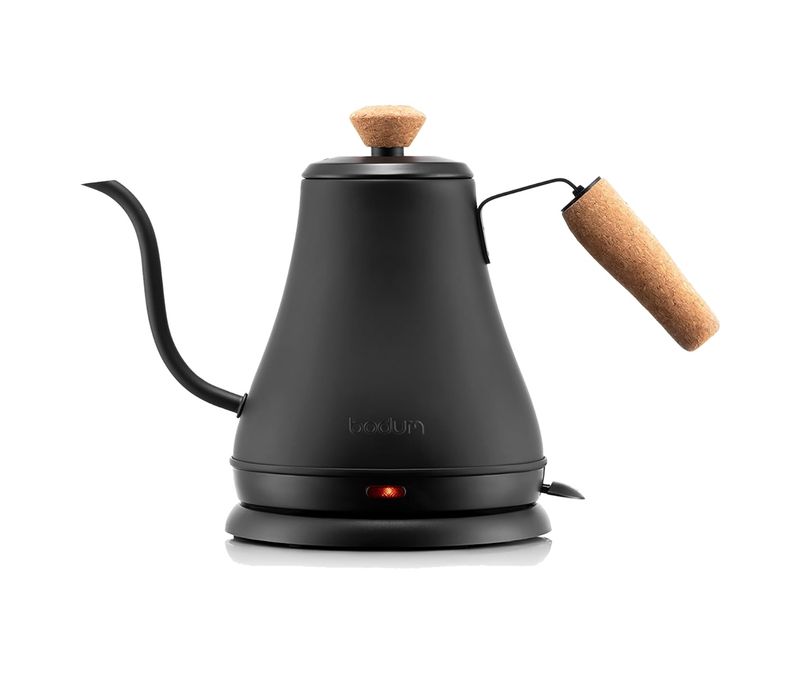
Start with the filter. A permanent stainless steel filter, as in the Bodum Pour Over, saves buying papers and lets more of the coffee's oils through; paper filters give a lighter cup. Then decide on size and material: glass shows the brew, steel survives knocks. The kettle matters as much as the brewer, which is why a gooseneck such as the Bodum Bistro is worth having alongside.
What is the difference between a French press and pour-over?
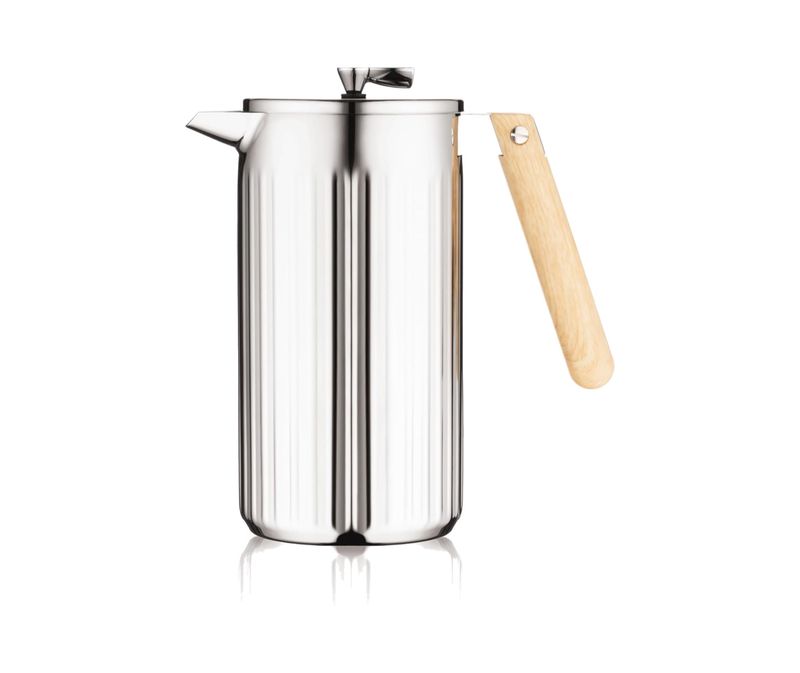
A French press steeps the grounds in the water for a few minutes and then pushes a steel mesh down to hold them back, giving a fuller, heavier cup with a little sediment. Pour-over runs the water through the grounds once, for a lighter, cleaner cup. The Bodum Caffettiera is the classic glass press; the Bodum Douro is its double-walled stainless steel version.
Why use a gooseneck kettle?
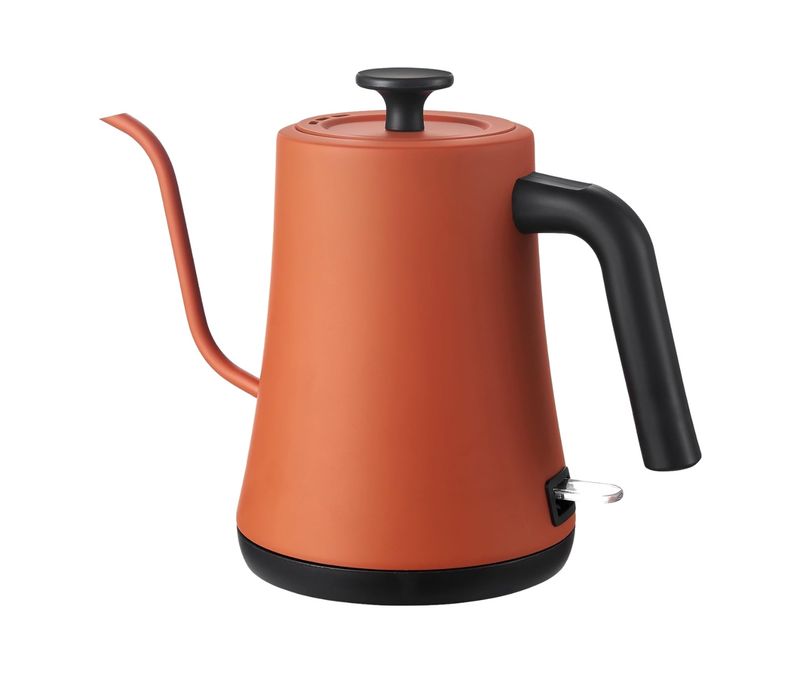
Its long, narrow spout lets you pour slowly and exactly where you mean to, which is what pour-over brewing depends on. The stovetop Hario V60 kettle holds 1.2 litres, of which about 0.8 to 0.9 is practical for boiling. Electric ones such as the Bodum Bistro or this 1-litre orange kettle heat the water themselves; the orange one switches off at the boil.


